5 Signs Your Google Ads Agency Is Wasting Your Money

I've been running my Google Ads agency for over 13 years, and I worked at other agencies before that for years. Close to two decades in this industry, and literally hundreds of businesses. So I've seen, up close, what good agency work looks like, and what bad agency work looks like.

Here's the uncomfortable truth.

Hiring a Google Ads agency is the highest-stakes decision an Ecommerce founder makes for paid media. You're spending $10K, $50K, $100K a month, trusting someone else with every decision. And a lot of agencies just aren't that great.

I see it every week. I'll audit a new account, and within about ten minutes I can tell you which corners the previous agency cut and roughly how much money they've cost the founder over the past year.

So here are five red flags that reveal whether you're being served well or quietly drained. I'm an agency owner myself, so I'm calling out my own industry. But I'd rather you find out now than after another twelve months of mediocre returns.

Google Ads Antitrust Refunds Explained: How To Check If Google Owes You Money

You might be owed money back from Google Ads. Legally.

There have been two federal court rulings that found Google was running an illegal monopoly on advertising, and as a result Google is being forced to issue massive refunds to advertisers. In fact, they might owe you up to 30% of everything you spent on Google Ads over the past 10 years or so.

To give you an idea of the scale here, we ran the maths on one of my clients, and they could be owed a massive $5.4M refund from Google. The same could apply to your account.

The Legal Case In Plain English

Let me start with what actually happened, no jargon.

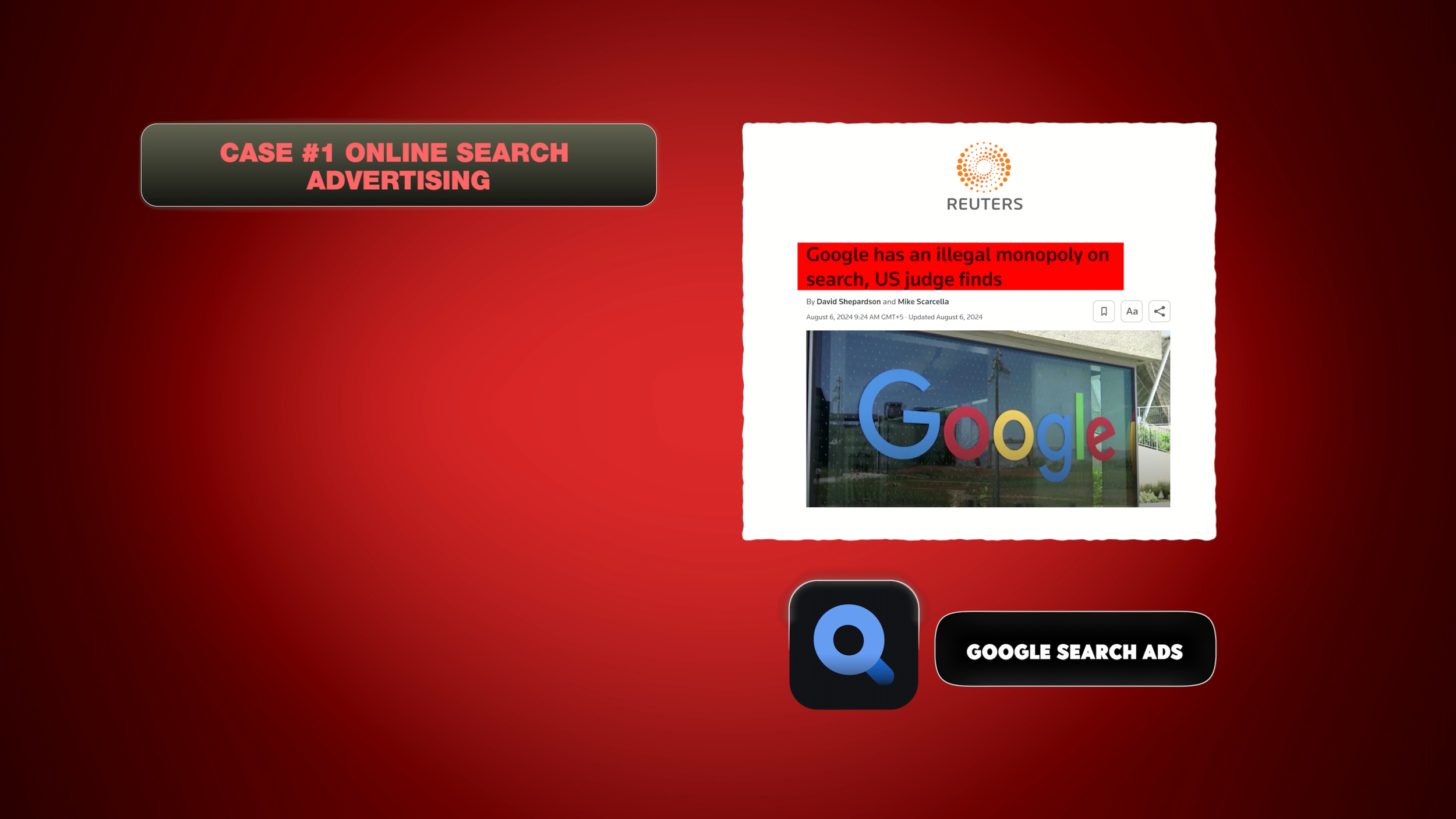
There were two separate court cases brought against Google by the U.S. Department of Justice. The first was about online Search advertising. In August 2024, a federal judge ruled that Google had illegally monopolised the Search advertising market. That covers everything you spend on Google Search ads.

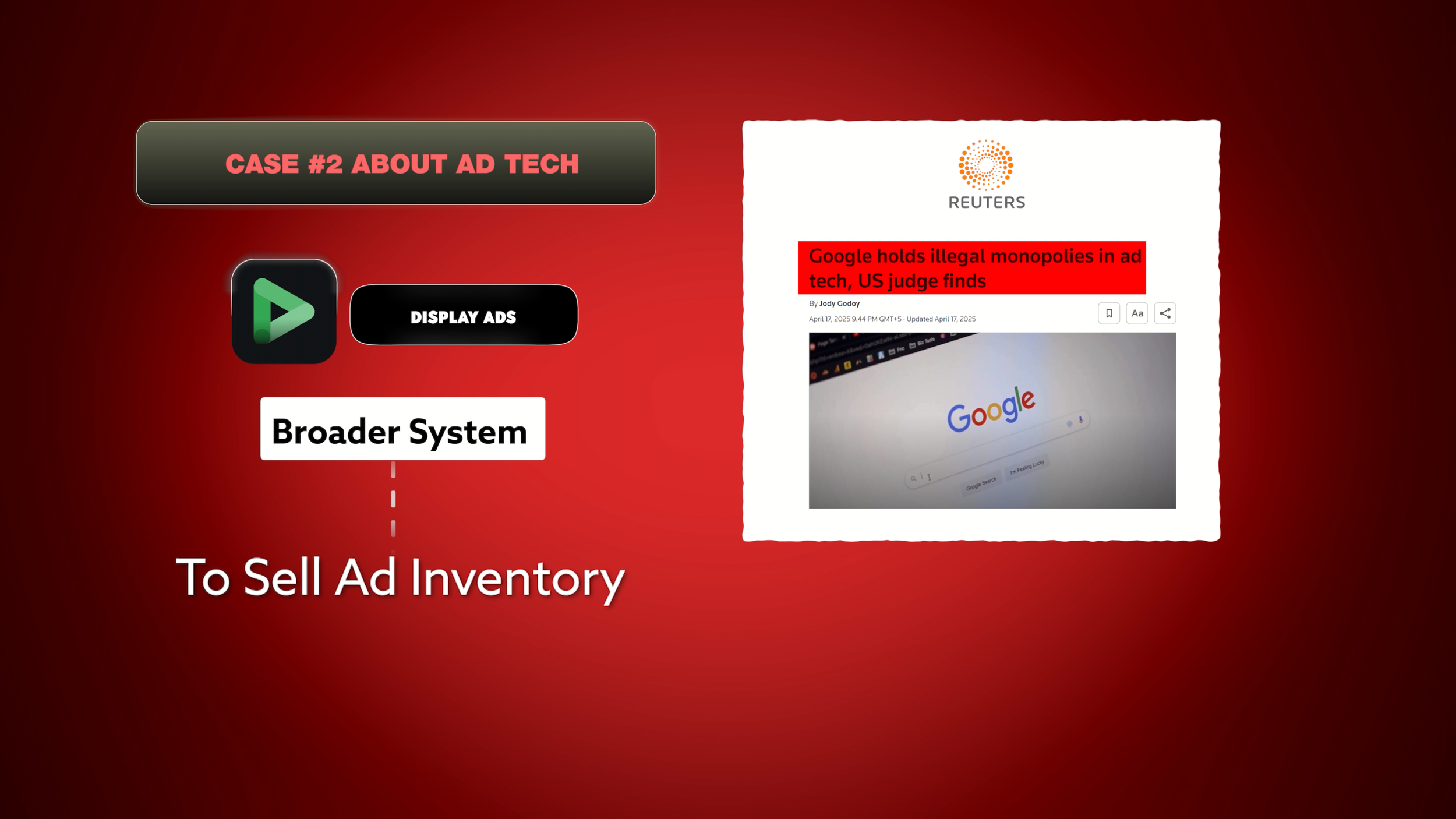
The second case was about ad tech, which includes Display ads and the broader system Google uses to sell ad inventory across the web. In April 2025, a different federal judge ruled that Google had also illegally monopolised that side of the business.

So between the two rulings, you now have federal courts saying Google ran an illegal monopoly on both Search ads and Display ads.

Here is why that matters financially. When a company has monopoly pricing power, it can charge more than it would in a competitive market. That is the whole reason monopolies are illegal in the first place; they raise prices on everyone. The argument now being made is that Google used that monopoly position to overcharge advertisers for years, and the estimated overcharge is around 10% of spend.

So if you spent a million dollars on Google Ads, the claim is that roughly one hundred thousand of that was an illegal overcharge.

Now here is where it becomes really interesting. Under U.S. federal antitrust law, successful claimants don't just recover the overcharge. They are awarded treble damages, which means three times the actual overcharge.

So that 10% overcharge becomes a 30% claim ceiling. If you spent a million on Google Ads, your claim ceiling is around three hundred thousand dollars.

I want to be careful with the language here, because nothing about this is guaranteed. It is a ceiling. It is the maximum you could potentially claim, and the actual settlement could be lower. But the ceiling itself is real, and it is based on federal law, not on marketing hype from a law firm.

Are You Eligible?

The next obvious question is whether you are actually eligible. Let's go through it carefully.

The basic eligibility criteria are pretty simple. You need to have spent money on Google Ads, either Search or Display or both, in the U.S. market anytime from August 2016 to the present day. That is the qualifying window.

There is no minimum spend. Businesses of any size qualify, from a tiny store spending a few thousand a year all the way up to enterprises spending millions.

But here is the very important caveat, and I want to be really clear about it. This particular program is U.S.-specific. The law firm filing these claims is filing on behalf of U.S. advertisers, for spend that happened in the U.S. market.

If you ran U.S.-targeted campaigns from outside the U.S., it may still be worth checking, because what matters here is the market your ads ran in, not where your business is headquartered. But if your spend was entirely outside the U.S., say you only ran ads in the UK, or Australia, or Europe, then this program almost certainly does not apply to you.

I'm saying this clearly because I know many of my readers are based outside the U.S., and plenty of you are nonetheless targeting the U.S. with your Google Ads. If that is you, I'd recommend speaking to local legal counsel in your country to understand your specific eligibility and whether or not you should file a claim. There could be similar actions brewing in other jurisdictions, but this specific program is for U.S. spend.

One more thing worth flagging. There is no upfront cost to file a claim through this program. The law firm running it is working on contingency, which means they are only paid if they win. So from your side, the cost of registering is essentially just your time. You add up your spend, you sign up, and the firm does the heavy lifting from there.

Work Out Your Own Number

Here is the part I think you'll find most useful: the simple maths to work out your own claim ceiling.

Step one is to find your total Google Ads spend in the U.S. market from August 2016 to today. Go into Google Ads and set a date range from 1st August 2016 all the way up to the present day. Make sure your filters are set to look at all campaigns, not just enabled campaigns, because an enabled-only filter would not give you the full picture. Then check the total spend number you now see in Google.

Step two is to calculate 30% of that number. Just open your calculator, take the spend number, and multiply by 0.3.

Step three, that's it. That is your claim ceiling. That is the entire calculation.

I ran the calculations for my clients, and here is what I can tell you. Even smaller advertisers spending just $5K per month on Google could be due around $200K in refunds, assuming they have been advertising the whole time since August 2016. My larger clients who spend six figures plus per month, well, they could be owed seven or even eight-figure payouts in some cases.

I really encourage you to actually run this calculation today. Even if you are not sure you want to file, just knowing the size of the potential claim is useful information and will help you decide.

The Filing Process

Let's say you've run the calculation, you have your number, and you want to file. Here is what to do.

The main law firm filing these claims is called Keller Postman, a major U.S. litigation firm. They announced on 11 May 2026 that they are now representing thousands of U.S. businesses in this action. The total claims they are filing add up to over $218 billion, which makes it the largest mass arbitration campaign ever filed by dollar value. So this is not some fly-by-night operation; this is a major firm with serious resources going up against Google.

To register your business, there are two websites you can use. The first is https://adsrefund.com/ and the second is https://adclaimfiling.com/. Both are official registration portals for the Keller Postman program. You go in, you provide your business details and your Google Ads spend numbers, and the firm takes it from there. Again, there is no upfront cost. The firm works on contingency, so they only take a cut if and when a settlement is reached.

A quick reminder for my international readers. If your spend was entirely outside the U.S. market, this specific program is not the right fit. If you are based outside the USA but your business was targeting the USA in its Google Ads account, you might be good to claim, but I would seek legal counsel in your home country first.

A Quick Reality Check

Before we wrap up, I want to give you a quick reality check so you have the full picture.

I have been deliberately careful throughout to say things like "could be owed", "claim ceiling", and "up to 30%", and I've done that for a reason. Nothing about this is guaranteed. The court rulings are real. The overcharge estimate is based on real expert analysis. The treble damages provision is real federal law. But the actual settlement amount, what claimants actually receive at the end of all of this, is still going to be determined through the arbitration process.

It could come in close to the 30% ceiling. It could come in significantly lower. Or in a worst case, it could be settled in a way that doesn't benefit individual claimants very much at all. So please don't bank on this money, and don't make business decisions today based on a settlement that hasn't happened yet.

But equally, and this is the bit I really want you to hear, if you are an eligible business and you haven't even checked your number, you are potentially leaving real money on the table. The downside is essentially zero. There is no upfront cost. It takes five minutes to calculate your number and another ten minutes to register. If a settlement happens, you receive a share. If it doesn't, you've lost nothing but a few minutes of your time. That is about as low-risk as opportunities of this magnitude come along in business.

Go and check your potential claim amount today.

Conclusion

Two federal court rulings have found that Google illegally monopolised both Search advertising (August 2024) and ad tech, including Display (April 2025). The argument now being made is that Google overcharged advertisers by roughly 10% of spend, and under U.S. federal antitrust law, treble damages triple that into a claim ceiling of around 30% of your total spend.

You are potentially eligible if you spent money on Google Ads, Search or Display, in the U.S. market from August 2016 to today, with no minimum spend. The program is U.S.-specific, so purely non-U.S. spend almost certainly does not qualify, and international advertisers targeting the U.S. should check with local legal counsel.

To find your own claim ceiling, pull your total Google Ads spend from 1 August 2016 to today (across all campaigns, not just enabled ones) and multiply by 0.3. The law firm Keller Postman is running the action on contingency with no upfront cost, filing over $218 billion in total claims, and you can register at adsrefund.com or adclaimfiling.com. Nothing is guaranteed, so don't bank on the money, but with near-zero downside it is well worth checking your number today.

How to Diagnose Low Impression Share, Tame Performance Max, and Fix Conversion Lag on High-Ticket Ecommerce Accounts

How to Diagnose Low Impression Share, Tame Performance Max, and Fix Conversion Lag on High-Ticket Ecommerce Accounts

I recently sat down to audit a Google Ads account for an ecommerce store that sells aftermarket car head units, those DIY stereo upgrade kits you fit yourself with a few basic tools. Lovely business: around 55-60% gross margins, an average order value of $800 to $1,000, four years of trading, and roughly $40,000 AUD a month going into ads. Healthy numbers. But under the bonnet there were a handful of problems quietly capping how much this account could sell, and they are the exact same problems I see on a huge number of accounts at this stage. So let me walk you through what I found and exactly what I told them to do about it.

The Search vs Shopping Imbalance

The first thing that jumped out was the revenue split. Search was pulling in around $150k while Shopping sat at just $50k. For most ecommerce accounts that is back to front, as Shopping usually does the heavy lifting. So I dug in, and the answer was simple: roughly $113k of that $150k in search revenue came from branded terms. People typing the brand name directly.

That tells you two things. The brand awareness is genuinely strong, which is brilliant. But it also means the account is leaning hard on people who already know who they are, and there is a whole world of non-branded demand being left on the table.

Impression Share Is Your Market Share

Here is the metric that made me sit up. The account's overall search impression share was around 15%. Some individual campaigns were as low as 13.68%.

I want you to internalise this: impression share is your market share.

A 15% impression share means you are showing up for roughly 15% of the searches you could be appearing in, and missing the other 85%. For context, I treat 30 to 40% as healthy, and 50 to 60% as exceptional. So this account was leaving an enormous amount of available market on the floor.

The next question is always the same: why are you losing it? Google splits this into two buckets, and the fix is completely different depending on which one is hurting you.

Lost to Budget vs Lost to Rank

When I broke down the impression share loss, only a small slice (somewhere around 5 to 11%) was lost due to budget. The majority was lost due to rank.

This distinction is the whole game, so let me give you the playbook.

Lost due to budget is the easy one. This is the quick win I love. If you are losing, say, 11.85% of impression share to budget, you simply raise your daily budget by roughly that same percentage. But before you touch anything, check two things. One, your bid strategy is Target ROAS. Two, your current ROAS is meeting or beating your target. If both of those are true, then raising the budget just buys you more of the same efficient volume. More sales at the same ROAS. It really is that clean.

Lost due to rank is the trade-off. This one means your bids are too low to compete; you are not paying enough to win the auction. Fixing it means raising your CPC bids, and raising bids will pull your ROAS down. So I only recommend this when your ROAS is sitting well above target and you have room to spend it. One campaign here was running at a 13x ROAS, which is a luxury problem; it can easily afford to chase a lower ROAS target in exchange for grabbing far more market share. If you are on Target ROAS, you lower the target to let Google bid higher. If you are on manual CPC, you raise the bids directly.

Sort Out Your Bid Strategies

Speaking of bidding, one campaign was still running on manual CPC, and I am not a fan of that for ongoing campaigns. Here is the approach I gave them, and it is the approach I would give you for any new campaign.

Start new campaigns on Maximise Clicks. Let them gather data until you hit somewhere between 30 and 50 conversions. Only then switch over to Target ROAS. That warm-up matters because smart bidding needs conversion data to learn from. Throw it on too early and it is flying blind. And once a campaign is established, leave manual CPC behind.

Performance Max Lacks Transparency

This client had already scaled back their Performance Max spend, and honestly, I understood why. They found it was quietly handing budget to placements that did not work, and the killer issue is that you cannot see the split between prospecting and retargeting inside PMax. You are essentially trusting a black box with your money and hoping it behaves.

So rather than fight the black box, I pulled the Channel Performance Report to see which placements were actually earning their keep. The results were really interesting:

  • Google Discover: 5.8x ROAS, a solid performer

  • Gmail: 8.5x ROAS, the standout

  • YouTube (non-product ads): 5.4x ROAS, very viable

  • Display: 1x ROAS, dragging the average down

The detail I found most telling was this: the ads that were NOT using the product feed were outperforming the product-feed ads in Discover and Gmail. The plain image and text creative beat the Shopping-style product ads in those placements.

Rebuild It as Demand Gen for Control

My recommendation was to step out of Performance Max for these placements and rebuild them as dedicated Demand Gen campaigns, where you actually hold the reins. This was my favourite part of the whole audit, because it turns a black box into something you can steer.

Here is the structure I laid out:

  • Demand Gen Image, Prospecting (for Gmail and Discover)

  • Demand Gen Image, Retargeting

  • Demand Gen Video, Prospecting (for YouTube)

  • Demand Gen Video, Retargeting

And the critical settings that make or break it: disable the Display network inside Demand Gen, because Display was the 1x dog. Exclude your retargeting audiences from your prospecting campaigns so you are not paying prospecting prices to reach people who already know you. And use square image and video assets, since those tend to perform best in Discover and Gmail.

The beauty of this is you finally separate prospecting from retargeting, so you can budget each one properly and actually measure what is working.

Conversion Delay Is Skewing Your Data

There was one more trap on this account, and it is one that catches out almost every high-ticket store. Only 33% of conversions happened on the same day as the click. The other 67% were time-delayed, anywhere from 1 to 12-plus days, with 11.7% taking more than 12 days to come through.

That makes complete sense for an $800 to $1,000 considered purchase: people mull it over. But it wrecks your data analysis if you are not careful. If you look at yesterday or the last 7 days, you are seeing an account that under-reports by roughly 30%, because a third of the sales simply have not landed yet. You will think a campaign has fallen off a cliff when really the conversions are still in the post.

So a few rules. Make sure you have at least 50 conversions before you trust ROAS data on anything. Account for the lag by avoiding very recent date ranges, or at least consciously excluding the most recent week. And use the bid strategy report to spot conversions that are coming but not yet reported.

Keep Bidding on Your Brand

Finally, I told them to keep bidding on their branded terms despite that big branded number. People sometimes assume they would win that traffic organically anyway, but organic brand click-through rate is typically only 30 to 50%, not 100%. And if you stop bidding on your own brand, your competitors will happily step in and bid on it for you. Brand traffic earns its place even if a slice of it would have converted for free.

A Word on Market Expansion

They also asked about expanding into the USA. My honest take: yes, the US is a far bigger addressable market, but it is also far more competitive. Do not assume your home ROAS will translate. The UK and Australia tend to sit at similar competition levels, but the US is its own beast. Some businesses thrive there from day one and others struggle at first, so go in with realistic expectations and a testing budget, not the whole farm.

Conclusion

This audit boiled down to a handful of fixable problems that show up on accounts everywhere. Impression share is market share, and 15% means you are missing 85% of your opportunities. Diagnose whether you are losing it to budget (an easy win, just raise the budget when ROAS is hitting target) or to rank (a deliberate trade-off, only worth it when ROAS is well above target). Warm new campaigns up on Maximise Clicks before switching to Target ROAS, and leave manual CPC behind. Performance Max hides your prospecting and retargeting split, so use the Channel Performance Report to find your winners (Gmail and Discover shone, Display flopped, and non-feed ads beat feed ads), then rebuild them as separate Demand Gen Image and Video campaigns for proper control. Respect conversion lag on high-ticket items by using wider date ranges and a 50-conversion minimum. And keep bidding on your brand, because organic only captures 30 to 50% of those clicks and competitors will take the rest.

New York's AI Ad Disclosure Law And Three More Ecommerce Ad Updates You Need To Know (July 2026)

New York has become the first US state to legally require advertisers to disclose when they use AI-generated or synthetic performers in their ads.

It took effect on the 9th of June, so it's already live. The penalty is up to $5,000 per violation. This was reported by the Associated Press.

Let me be clear about what it covers, so you don't panic if it doesn't apply to you.

How to Improve Your Google Ads ROAS: Six Tactics Every Ecommerce Advertiser Misses

I've spent the last 13 years running a Google Ads agency that has helped hundreds of ecommerce clients, and in that time I've found six things almost every advertiser does wrong. Fix them and you'll seriously increase your ROAS, sometimes by huge margins and sometimes within days. These aren't theory, they're the exact optimisations my team and I run for clients.

The New Rules of Google Ads for Ecommerce in 2026

If you're running Google Ads for an ecommerce business right now, I have some uncomfortable news for you. Almost everything you knew about how to run Google Ads has changed. The old playbook is officially dead. Tactics that used to be considered best practice will now actively lose you money, and tactics that we used to avoid like the plague are suddenly some of the best things you can do in your account.

How to Fix Your Performance Max Campaign Structure for Maximum Profit (Ecommerce Case Study)

I recently reviewed the Google Ads account for an Ecommerce brand running around $10k/month across European markets. They had roughly 1,600 SKUs, an average order value of about $278, and a gross profit margin of approximately 38%.

On the surface, decent numbers. But once I looked under the bonnet, there were tens of thousands of dollars in potential profit being left on the table every year. And the scary part? Almost every issue I found is something I see in the majority of Ecommerce accounts I audit.

So let me walk you through exactly what was wrong, and what I recommended to fix it.

How One Ecommerce Store Owner 5x'd Shopify Revenue in Under Six Months Using Google Ads and Performance Max

I recently sat down with Valerio Bernabo, the owner of Trade Hero Australia, an ecommerce business that sells high-ticket B2B tools and machinery to construction businesses. Valerio came to me back in October 2025, and within six months, he had 5x'd his Shopify revenue using Google Ads. In fact, sales increased so dramatically that he ran out of stock.

I wanted to share Valerio's story because the mistakes he was making before we worked together are ones I see constantly, and the fixes are straightforward enough that you could apply most of them to your own account this week.

June 2026 Ecommerce Ads Roundup: ChatGPT Ads, Google Universal Cart, Agentic Media Buying, and the DSA Sunset

ChatGPT now has ads inside it, and your products might already be showing up in there whether you like it or not. That chat box millions of people open every single day has just turned into a brand new place to sell your stuff. That is the headline this month, but there are four more stories worth your attention, including a billion-dollar brand that handed its entire ad budget to an AI. Let me run through all five.