
If you're running Google Ads for an ecommerce business right now, I have some uncomfortable news for you. Almost everything you knew about how to run Google Ads has changed. The old playbook is officially dead. Tactics that used to be considered best practice will now actively lose you money, and tactics that we used to avoid like the plague are suddenly some of the best things you can do in your account.
I've been running my agency Big Flare for over 13 years, and in that time my team and I have generated more than $150 million in ecommerce revenue for our clients on Google Ads. I can tell you with total honesty that the way we run accounts now looks nothing like the way we ran them even two years ago. Here are the 8 rules working in our agency right now, on accounts spending hundreds of thousands of dollars a month.
Rule 1: Broad Match Is Good Now
This one is going to surprise a lot of you. For years you'll have been told to avoid broad match like the plague, and for good reason. Broad match used to be so loose, so wide, that it would match your ads to all kinds of irrelevant junk searches. You'd burn through your budget on terms that had nothing to do with your product.
Things have genuinely changed. Google's algorithm has had massive AI improvements over the last couple of years. It now understands user intent far better, it pulls in audience data, it uses your keywords as guidance rather than rigid matches, and it makes much smarter decisions about who actually sees your ad. At Big Flare we're running broad match in pretty much every client account now, and it's working. It often finds search terms you'd never have thought to bid on that end up converting beautifully, and it scales your volume in a way that exact and phrase match simply can't manage.
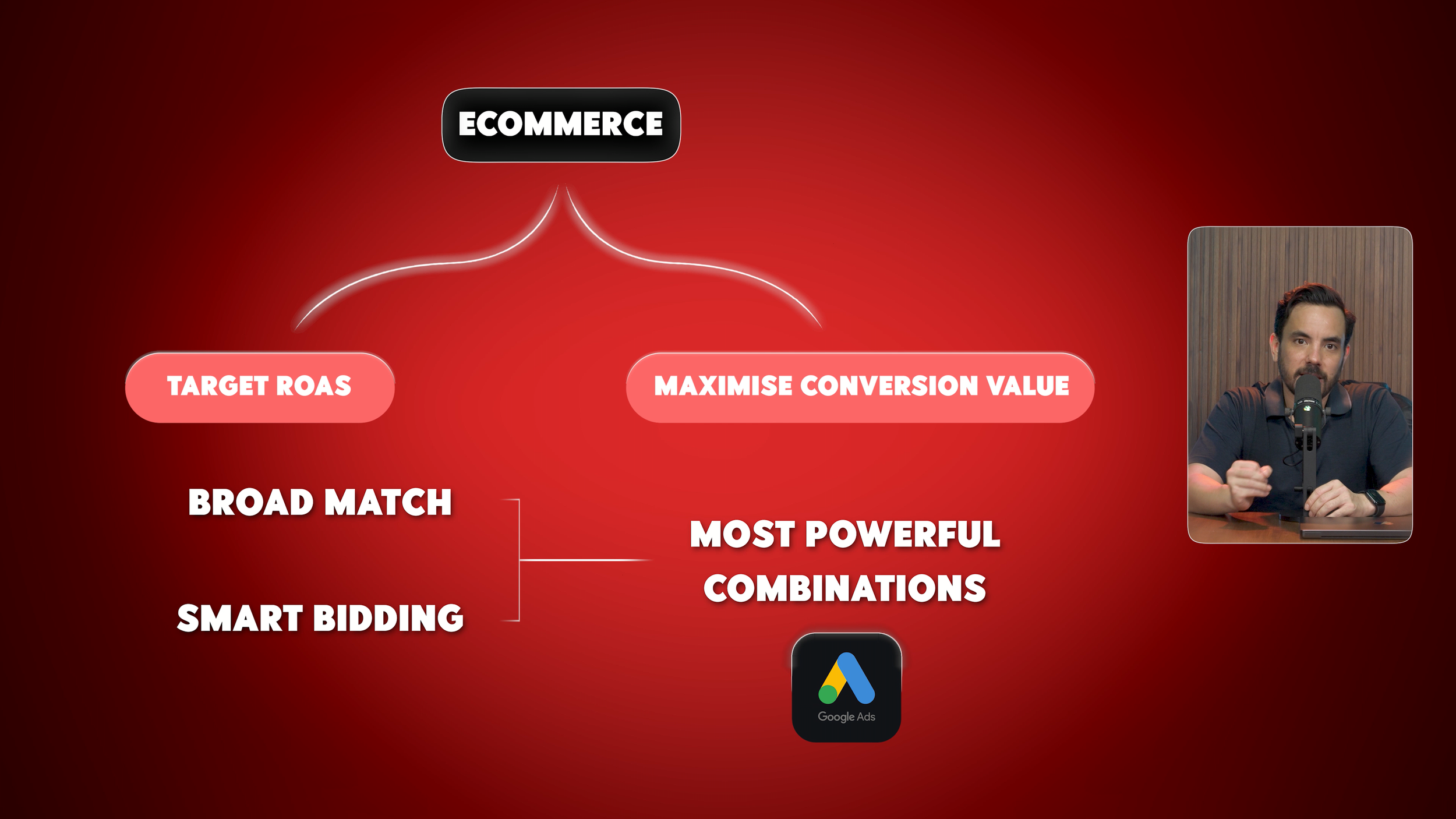
Here's the critical caveat though. You cannot, I repeat, you cannot run broad match on manual CPC. It'll be an absolute disaster. You must use smart bidding with broad match, and for ecommerce that means Target ROAS, or Maximize Conversion Value if you're just starting out. Which leads me straight into rule two.
Rule 2: You Have To Be Using Smart Bidding
This isn't a "should do" anymore. It's a must. I understand why some old-school advertisers still cling to manual CPC. Years ago, manual CPC genuinely was loads better. You had precision, you had control, and Google's automation was honestly pretty rubbish. You could outperform the algorithm just by being a careful, attentive human being.
Those days are well and truly gone. In 2026, anyone manually piloting their CPC bids instead of using Target ROAS or Target CPA is wasting money, full stop. The smart bidding algorithms now process signals you literally cannot see as a human: someone's browsing history, their previous purchases, what they searched for last week, what they watch on YouTube, and a whole lot more. You cannot compete with that manually.
And this isn't just about search campaigns. Smart bidding is required across every campaign type now: Performance Max, Demand Gen, Search, Shopping, all of it. You should know how it works, you should know your conversion thresholds, and you should be considering those thresholds when you build your campaign structure.
Rule 3: AI Is Changing The Game
And I don't just mean smart bidding. I mean the entire way people use search engines is changing. Google now has AI Mode and AI Overviews built into the search results, and both of those have ads inside them. You want to make sure your ads are showing up well in those AI-powered surfaces, because that's where a huge chunk of high-intent traffic is going.
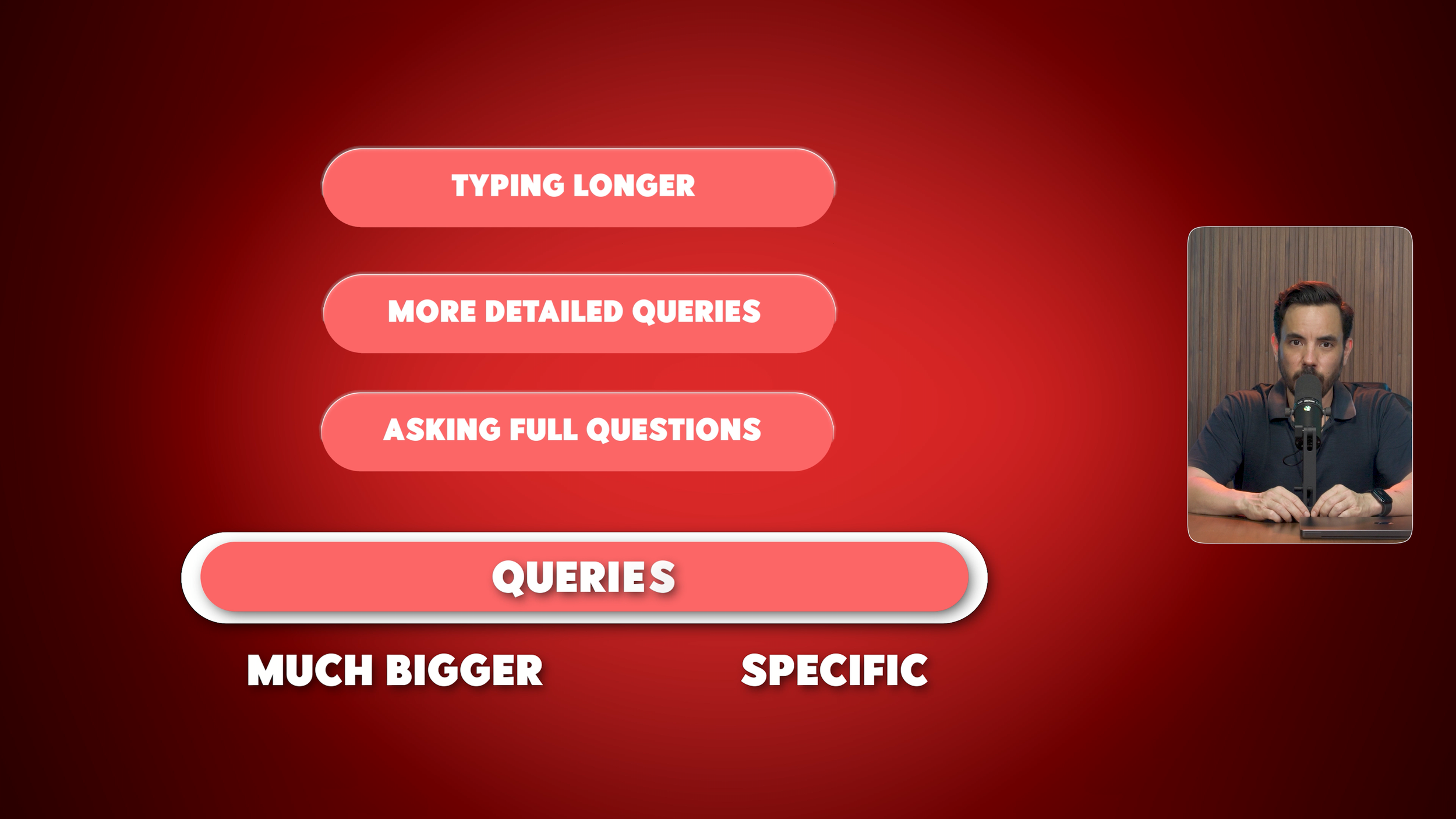
Beyond Google itself, people are searching differently. They're typing longer, more detailed queries and asking full questions instead of bashing in two or three keywords. The long tail of search is filling up with much bigger, much more specific queries, which is yet another reason broad match works so well now. Exact match keywords cannot capture all those new conversational queries. Broad match plus smart bidding can. The platform you're advertising on is becoming an AI platform, and the best advertisers in 2026 lean into that rather than fight it.
Rule 4: Conversion Data Is More Important Than Ever
Clean, accurate conversion tracking has always mattered, but in 2026 it's gone from important to absolutely critical. We've just established that you have to use smart bidding, and smart bidding is AI. For AI to do its job well, it needs a high-quality signal telling it when it's hit the mark and when it hasn't. That signal is your conversion data.
If your conversions are tracking incorrectly, or you simply don't have enough of them, the AI is flying blind. It'll spend your money in the wrong places, optimise towards the wrong outcomes, and your ROAS will tank. So you need two things. First, accurate tracking, ideally with enhanced conversions and the Google Ads tag set up properly, plus server-side tracking to improve data quality and the number of conversions captured. Second, you need volume. A good benchmark is at least 30 to 50 conversions per month per campaign before you can really trust the data. The more conversion data you feed in, the better trained your smart bidding becomes, and the more profitable your account gets. It's the single biggest lever you have.
Rule 5: Consolidation Is King
This is a complete reversal from how we used to do things. The old-school approach was highly granular: single keyword ad groups, hundreds of campaigns, tightly themed ad groups for every keyword variation. I used to set up accounts that way myself. It made sense at the time because the algorithm was dumb and you needed to control every variable manually.
That approach is now dead. These days, the fewer campaigns and ad groups you have, the better, and it ties directly back to rule four. When you split your account into 50 campaigns, your conversion data splits into 50 tiny puddles, none of them big enough to train the AI properly. Consolidate everything into a small number of campaigns and all that data pools together. The AI gets a much stronger signal, it learns faster, it optimises better, and it makes you more money. In my agency we're running ecommerce accounts on sometimes as few as three to five campaigns in total. Sometimes just one Performance Max campaign plus a couple of search campaigns, and that's it. Trust the AI, give it room to breathe, and feed it as much data as possible.
Rule 6: Your Product Feed Is More Than Just Shopping Ads
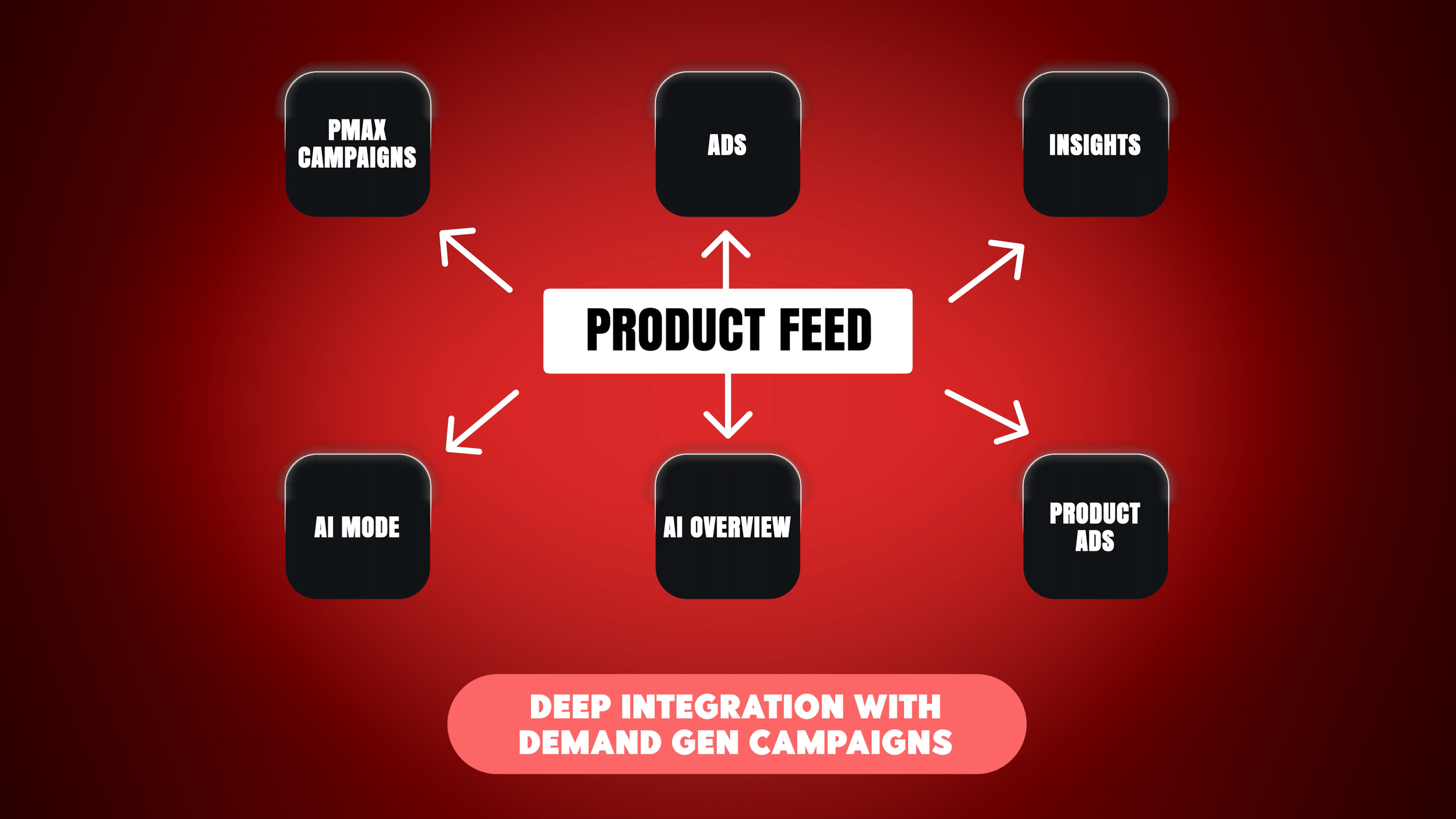
For years, advertisers thought of the product feed as the thing that powers shopping campaigns. You'd upload it to Merchant Center, it would feed Standard Shopping, and that was about it. That mental model is completely out of date. In Google's own language, product feeds are no longer just shopping ad drivers. They are the foundational source of truth for AI-powered omnichannel marketing.
Translation: your product feed now powers ads across pretty much every Google AI surface. It powers Performance Max, it powers ads inside AI Mode and AI Overviews, it powers product ads on YouTube and connected TV, and it has deep integration with Demand Gen. A poorly optimised feed isn't just hurting your shopping campaigns anymore, it's hurting your entire account.
So treat it like the strategic asset it is: strong keyword-rich product titles, high-quality images, accurate product types and categories, GTINs filled out correctly, custom labels for segmentation, and good descriptions that match how customers actually search. In 2026, your product feed IS your account.
Rule 7: Demand Gen Actually Works Now
When Demand Gen first launched, my honest take was "eh, it's okay." It was fine for some accounts, but it wasn't reliably profitable and most of my clients were doing better elsewhere. That has completely changed in the last 12 months. Demand Gen is now genuinely working as a top-of-funnel and mid-funnel ad type for ecommerce.
Assuming your product is suitable for top-of-funnel advertising, and not everyone's is, and assuming your landing pages are decent, Demand Gen can work wonders. We're seeing some of the best top-of-funnel performance we've ever seen on Google through it right now, specifically by focusing on YouTube videos within Demand Gen. That's where the magic is happening. We're getting Meta-level performance on Demand Gen with YouTube ads these days, and that literally was not possible two or three years ago. Google did not have a real top-of-funnel option that could compete with Facebook and Instagram for ecommerce, but now they do. If you've been running purely bottom-of-funnel campaigns and hit a ceiling, Demand Gen is probably the unlock you've been looking for.
Rule 8: Google Display Network Retargeting Is Basically Dead
This is something I've noticed in our agency, and chatting with industry colleagues, they're all seeing exactly the same thing. If you launch a Google Display Network retargeting campaign in 2026, it often just struggles. The ROAS is low, the volume is low, and it barely moves the needle. Which is wild, because GDN retargeting used to be one of the most reliable high-ROAS plays in the entire account. You used to launch a remarketing campaign and instantly see double or triple the ROAS of your cold traffic. Not anymore.
So what do you do instead?
Two options.
First, let Performance Max handle retargeting for you. Add plenty of images and videos to your asset groups and PMax will retarget your existing visitors across all of Google's surfaces. Second, set up retargeting inside a Demand Gen campaign. Demand Gen has much stronger retargeting performance than the old GDN now, and you reach better placements like Google Discover. But running a standalone GDN retargeting campaign as its own thing? Don't bother. It's a relic of the old playbook.
Conclusion
The way to win on Google Ads for ecommerce in 2026 is almost the mirror image of the old playbook. Embrace broad match, but only with smart bidding behind it. Treat smart bidding as mandatory across every campaign type. Recognise that AI is reshaping how people search and where ads appear, and lean into it. Protect your conversion data fiercely, because it's the fuel your smart bidding runs on. Consolidate your account into a handful of campaigns so that data pools instead of scattering. Treat your product feed as the foundation of your entire account, not just your shopping ads. Lean on Demand Gen, particularly with YouTube videos, for the top-of-funnel scalability Google finally offers. And stop pouring money into standalone Google Display Network retargeting; hand that job to Performance Max or Demand Gen instead. Master these eight rules and you'll be running the kind of account that actually works in 2026.