
I've been running my Google Ads agency for over 13 years, and I worked at other agencies before that for years. Close to two decades in this industry, and literally hundreds of businesses. So I've seen, up close, what good agency work looks like, and what bad agency work looks like.
Here's the uncomfortable truth.
Hiring a Google Ads agency is the highest-stakes decision an Ecommerce founder makes for paid media. You're spending $10K, $50K, $100K a month, trusting someone else with every decision. And a lot of agencies just aren't that great.
I see it every week. I'll audit a new account, and within about ten minutes I can tell you which corners the previous agency cut and roughly how much money they've cost the founder over the past year.
So here are five red flags that reveal whether you're being served well or quietly drained. I'm an agency owner myself, so I'm calling out my own industry. But I'd rather you find out now than after another twelve months of mediocre returns.
Red Flag 1: Juniors Are Actually Running Your Account
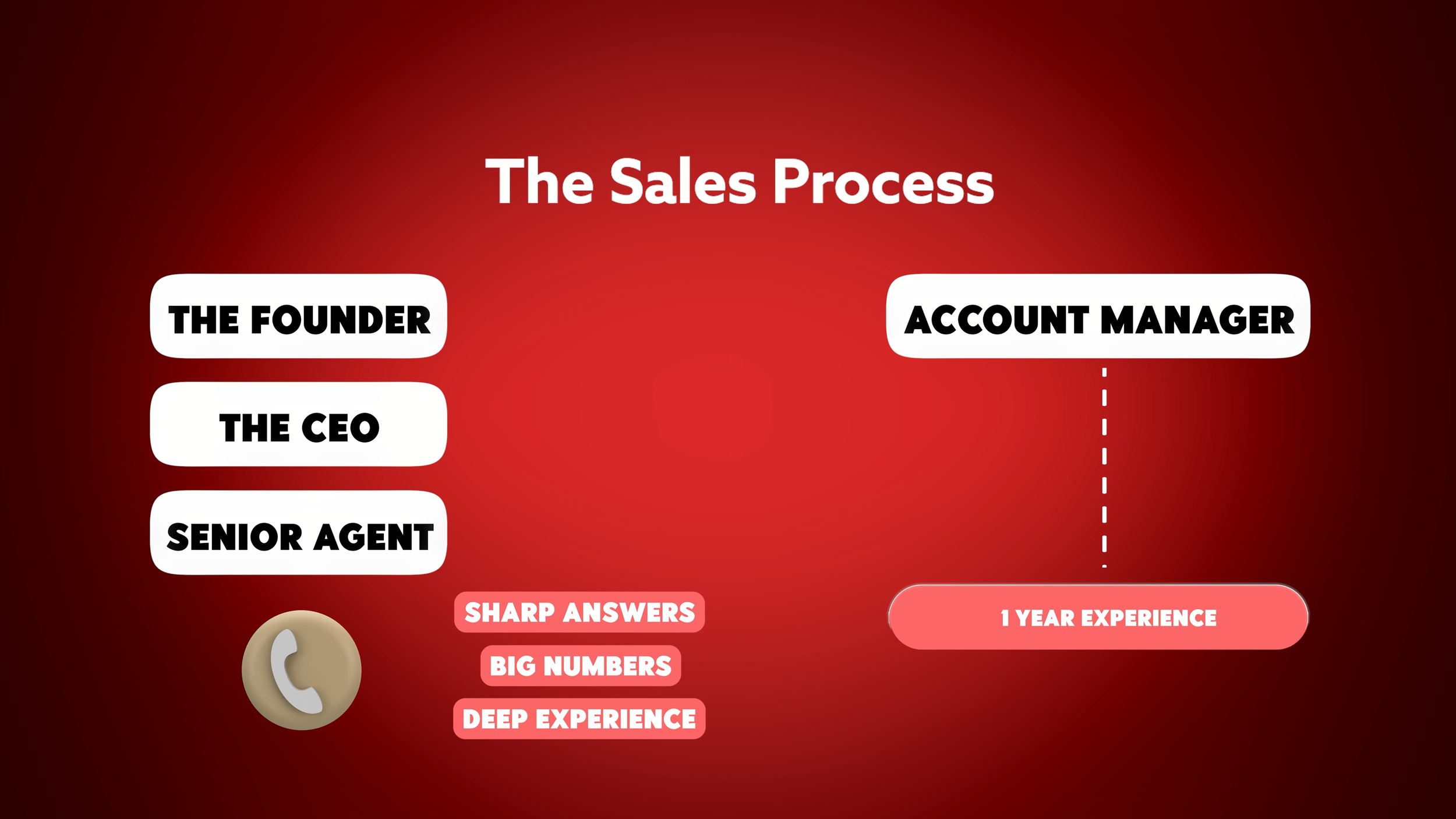
Think back to the sales process. They probably wheeled out the founder or CEO to charm you on the call, and you walked away feeling like the senior team would be hands-on with your money. Then onboarding happens, and you're introduced to your actual account manager, who has one or two years of experience and is sometimes literally fresh out of university.
Now I have nothing against juniors, and I have newer specialists on my own team. But there's a real problem when a junior is the only person touching your account, because running Google Ads is not just an ads problem, it's a business problem.
To run an account well, the person at the wheel needs to understand how your business actually makes money: your margins, a good customer acquisition cost for your category, how returns and refunds affect profitability, and how seasonality, pricing, and lifetime value feed back into the ad account. A specialist with a year or two of experience simply hasn't seen enough businesses to have that perspective. They know the buttons in Google Ads, but not what to do with them in your context. The result is an account that's technically maintained but never strategically pushed.
If you're paying senior money based on the sales call but receiving junior execution day to day, that's red flag number one. A good agency puts real talent on managing accounts, not just on the sales side.
Red Flag 2: A Templated, Cookie-Cutter Approach
This one is everywhere, and it follows directly from the first flag. When juniors are running accounts at scale, the only way an agency keeps things moving is to hand them a template: a default campaign structure, strategy set, and weekly tick box of "optimisations" that don't move the needle. It lands on every client regardless of need. The agency calls it a "proven framework". What it really is, is the same setup recycled across a hundred totally different businesses.
Your business is not built off a template. You have a specific product mix, margin profile, buyer journey, competitor set, and seasonal rhythm. A campaign structure that works brilliantly for a high-margin DTC apparel brand will quietly destroy a low-margin B2B promotional products brand.
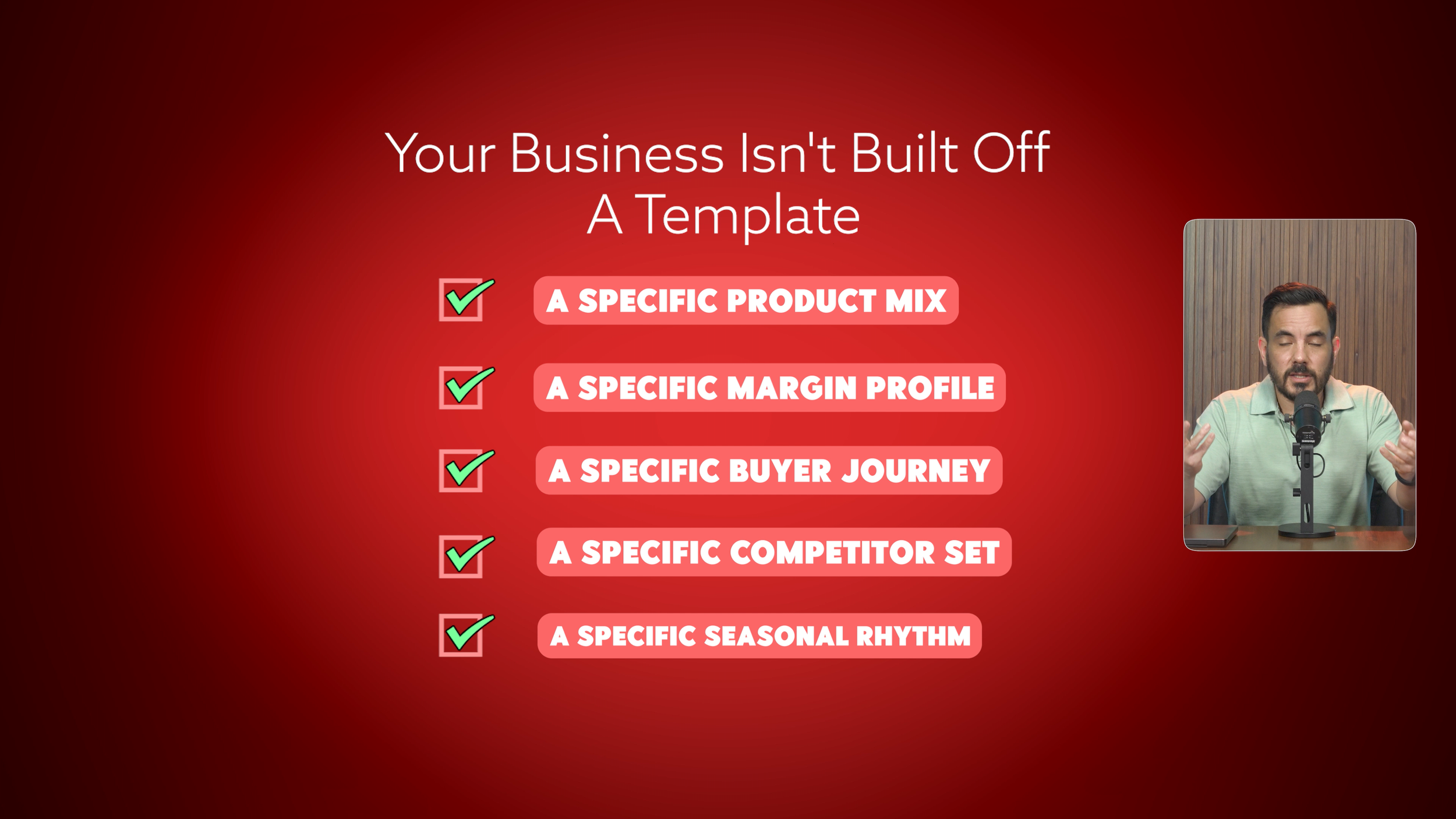
What you actually want is the opposite of templated: someone who asks proper questions about your business, then designs a strategy built for you. How should your product grouping map to ad groups or asset groups? Where should you concentrate spend, and how should bid strategies be tuned to your margins?
That bespoke setup is what genuinely moves the needle. If your current agency can't show you why your account is structured the way it is, in terms of your business rather than their template, you're paying premium money for a recycled blueprint. That's red flag two.
Red Flag 3: They Ghost You
This is the agency you can never quite reach: email only, no direct line, no way to fire off a quick message when something urgent comes up. You send a critical question on a Monday, performance has dropped or a tracking issue has cropped up, and the reply, if it comes at all, lands the following week as a paragraph of fluff that doesn't address what you asked.
Here's why this matters in Google Ads. It's a live, real-time platform. If something's going wrong, every day you wait is more money down the drain. If something's going right, every day you wait is missed scale. The pace of communication has to match the pace of the platform.
If your agency only operates on a weekly email rhythm, they aren't running your account at the speed the platform demands. A good agency gives you a direct line to the person on your account: phone, DMs, Slack, WhatsApp, whatever the channel, you can reach them quickly and receive fast, specific answers. If you can't, that's red flag three.
Red Flag 4: Set And Forget
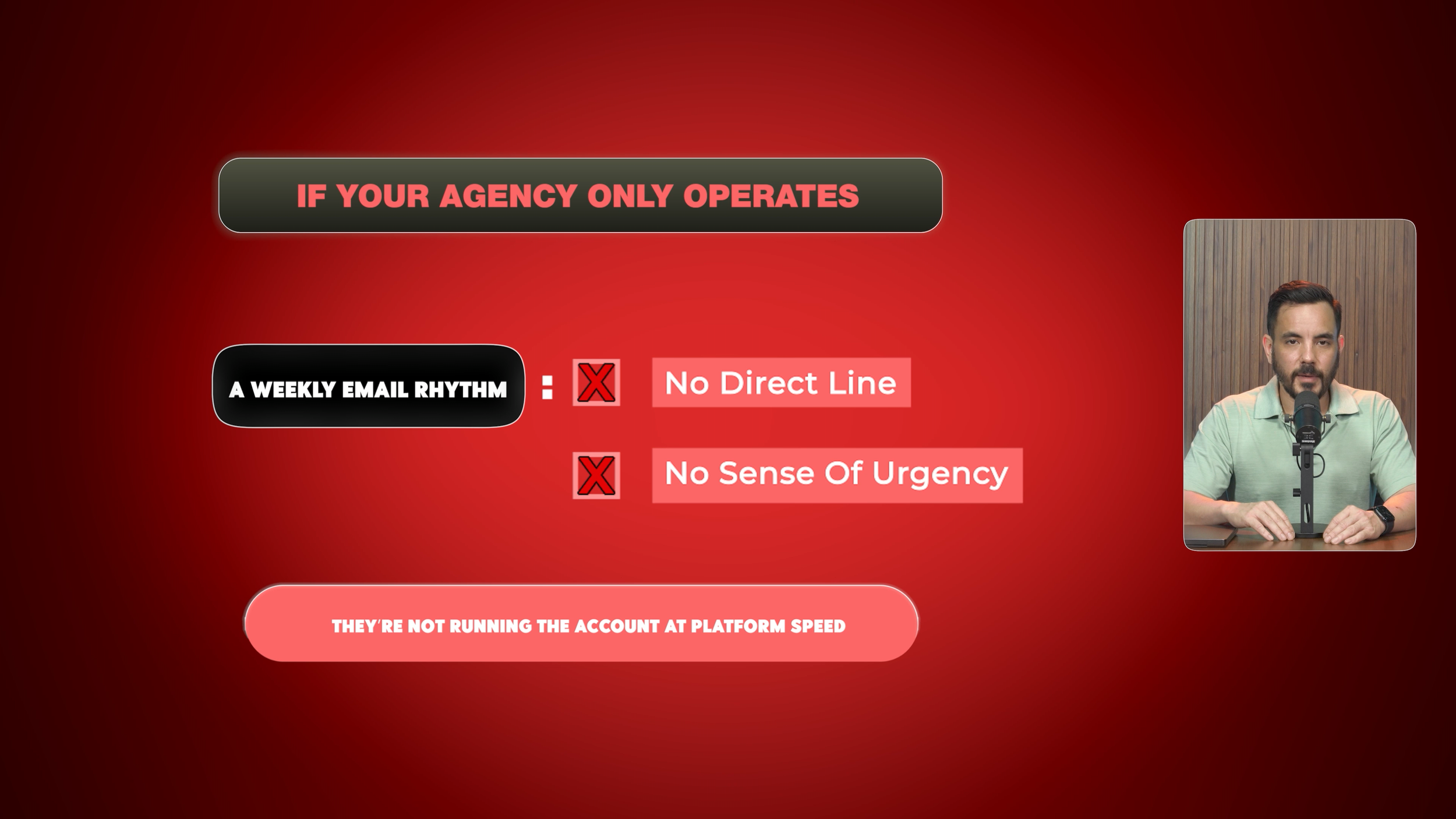
Some agencies take on a new client, build the initial campaigns, and then head to the beach. Each month they fire off an automated report, but there's no real, active optimisation happening. The retainer keeps landing while your account sits quietly on autopilot.
There's a simple sanity check. Go into your Google Ads account, click into Change History, set the date range to the last thirty days, and see how much actual activity there is.
One caveat. Change History is not the be all and end all. Plenty of real work happens outside of it: strategising, planning, data analysis, monitoring competitors, and changes made through an API tool that never shows up. So if it looks sparse, give your agency some benefit of the doubt, but don't stop there.
The real way to find out is to talk to them. Ask what they've been working on this week and what they're planning next week. If they have clear, specific answers, you're probably in good hands. If they fumble, turn defensive, or offer a vague "we've been monitoring", that's a problem. And while change history isn't everything, there should still be something there. If it's completely dead, not a single change in the past month, that's straight up set and forget, and that's red flag four.
Red Flag 5: They Have Too Many Clients
The people running your ad campaigns have way too many clients. This is the structural red flag that causes a lot of the others on this list. Some agencies maximise margins by stacking client load onto their team: more clients per head, fatter margins for the founders. The cost shows up in two places: the mental health of their team, and the quality of the results you receive.
Here's a rule of thumb.
If your agency runs a lot more than 10 clients per specialist, they're likely overloading their team. At fifteen or twenty, the quality is almost certainly suffering. I've seen other agencies load more than 30 clients per account manager, and at that point even the best Google Ads specialist in the world cannot pay proper attention to thirty businesses at once. It's not a skill issue, it's a maths issue. There simply aren't enough hours in the week.
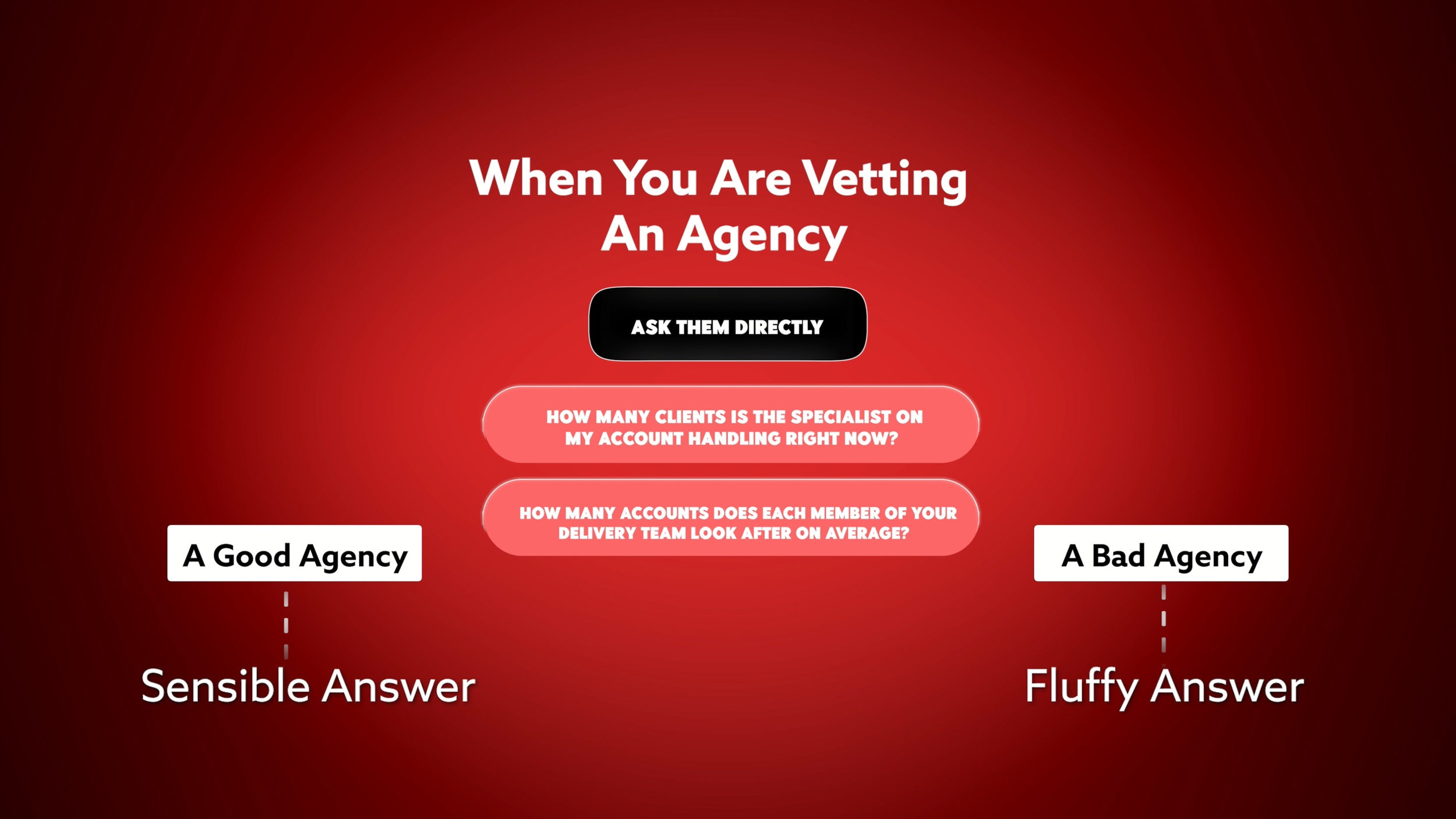
This is usually the real reason behind the ghosting in red flag three and the set and forget in red flag four. The person on your account isn't necessarily low skill or lazy. They're just buried. So ask directly: how many clients is the specialist on my account handling right now, and how many does each delivery team member look after on average? A good agency will have a clear, sensible answer. A bad one will dodge or quote a number that quietly tells you they're stretched.
If your person has too many clients, you can't fix it by demanding more from them. The only fix is for the agency to cap their client load, or for you to find one that already does. That's red flag five, and it's the structural one that makes most of the others possible.
What To Do Now
So those are the five. One is a yellow flag, worth a conversation. Two or three is a serious problem and you need to act. And if you recognised all five, I'm sorry, but you've already lost a lot of money and you need to make a change very soon.
The first step is simply to ask your agency directly:
Who is the actual specialist on my account, and how much experience do they have?
Why is my account structured this way, specifically for my business?
What's the fastest way to reach you when something urgent comes up?
What did you do on my account last week, and what's planned for next week?
How many other clients is my specialist handling right now?
Watch how they respond. A good agency will have clear, confident answers to every single one. A bad agency will turn defensive or try to change the subject. That's the diagnostic right there.
The opposite of everything above is exactly how we run accounts at Big Flare: senior specialists on the account, custom campaign structures, fast direct communication, and a hard cap on client load per specialist. If you're recognising your own agency in these red flags, I offer a free strategy call where I'll personally look at your account and tell you honestly what I think. No hard sell, just a straight read on whether we'd be a good fit.
Conclusion
Hiring a Google Ads agency is the highest-stakes paid media decision an ecommerce founder makes, and plenty of agencies aren't earning their retainer. Watch for five red flags: juniors quietly running your account when you were sold the senior team; a templated, cookie-cutter approach recycled across every client; an agency that ghosts you when the platform demands real-time communication; a set and forget relationship you can sanity check via Change History and a straight conversation; and specialists carrying far too many clients, the structural problem that causes most of the others. Score yourself honestly. One red flag is worth a conversation, two or three means act, and all five means leave soon. The fastest diagnostic is to ask your agency five direct questions and watch how confidently they answer.