Why Headlines Matter 10x More
I have a very simple rule when writing Google Ads:
Headlines move the money.
Descriptions help, but they are the supporting cast.
In account after account, headlines carry roughly 90 percent of performance, with descriptions adding at most 10 percent. People skim. They decide to click based on what those 30 characters say and how it makes them feel.
What this means in practice:
Spend most of your energy crafting, testing and pruning headlines.
Think benefit first, clarity second, cleverness a distant third.
Keep options varied. You need different headline types, not ten clones of your main keyword.
Settings And Traps To Avoid
I love control as much as the next media buyer, but there are two settings that regularly sandbag results.
Do not pin headlines
Pinning feels safe. In testing, it usually reduces click-through rate.
Let Google rotate.
When you give the system room to assemble different combinations, you get more impressions at better positions and more clicks. Pin only if you must avoid a regulatory or compliance issue.
Skip Dynamic Keyword Insertion
Dynamic Keyword Insertion sounds neat until your ad groups widen and you end up with odd phrasing that hurts performance. Unless your structure is incredibly tight, write the keywords in manually. That way the copy always reads the way you want, and it remains on brand and on message.
Keep variety high
A common mistake is spamming the same keyword across most headlines and descriptions. Include a few keyword mirrors, then branch into benefits, offers, social proof, brand-led lines and credibility markers. Varied inputs give the system better permutations and broader match to intent.
The 8 Elements That Make Ads Click And Convert
These are the building blocks I reach for each time I write or edit ad copy. Mix them through your headlines and, to a lesser extent, descriptions.
1) Keywords that mirror intent
When someone searches for “best running shoes for men”, the winning headline mirrors that intent: “Shop Men’s Running Shoes.” Simple, relevant, high intent.
Why it works: mirroring reduces cognitive friction. The user feels they are in the right place and quality score benefits via ad relevance.
Practical tip: build two or three mirror-headlines per ad group that use the main keywords naturally. Do not force grammar. Clarity beats exact-match awkwardness.
2) Calls to action that command behaviour
Tell people what to do.
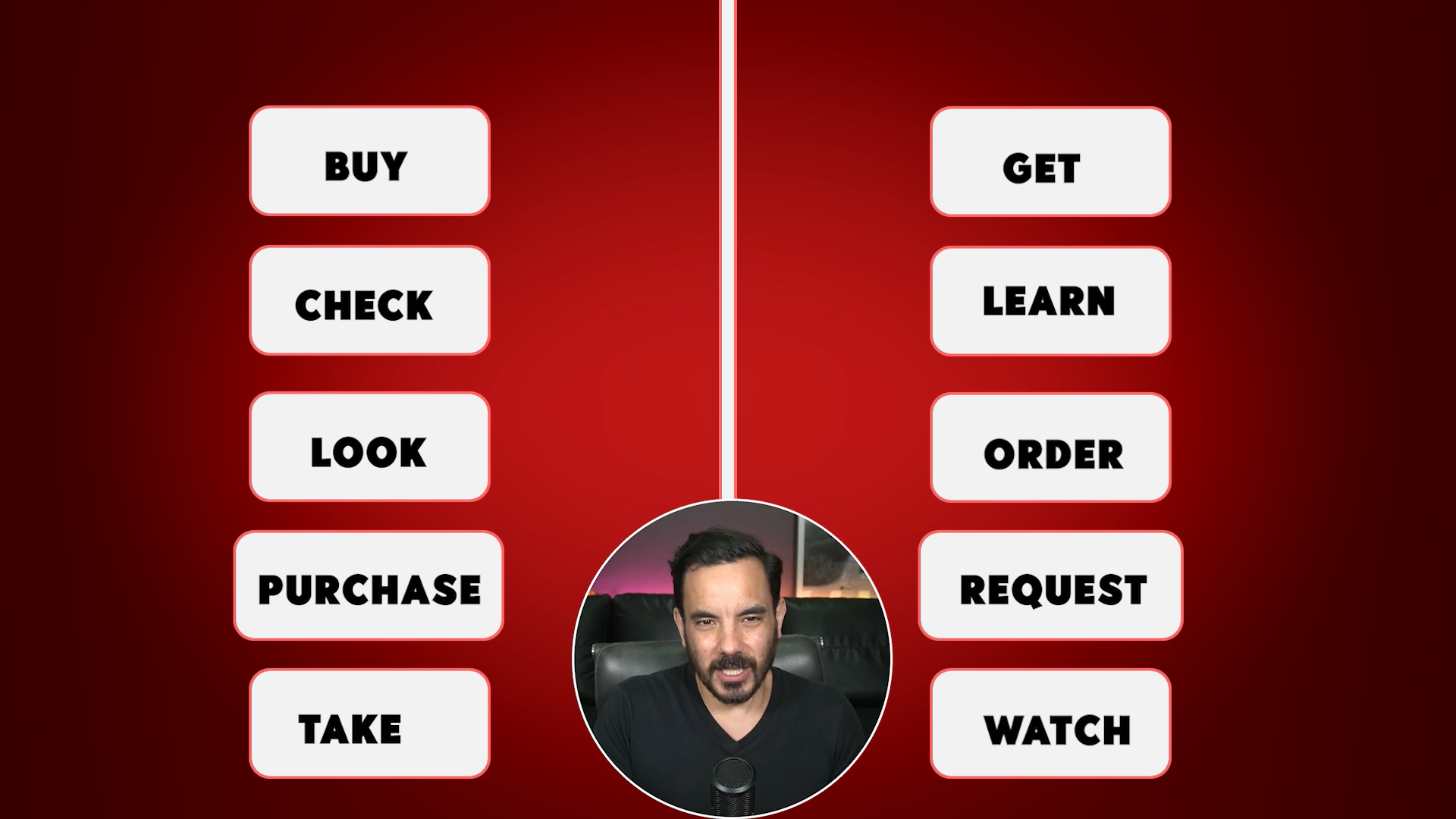
Use strong verbs:
Buy, Get, Check, Learn, Look, Order, Purchase, Request, Take, Watch.
Then combine the verb with a reason to act.
Examples you can swipe:
Shop Now and Save
Get Free Delivery Today
Claim Your 20% Off
Try Risk-Free Today
Join 10,000+ Happy Customers
Grab The Deal Before It’s Gone
Learn More
Limited Offer. Act Fast.
3) Benefits over features, or a smart mix of both
Features describe what something is. Benefits describe what it does for me.
The brain buys the change in feeling.
Feature example: “Breathable mesh. Cushioned sole. Eco-friendly materials.”
Benefit example: “Stay cool, feel light, and run all day without tired feet.”
Use my favourite mini formula to combine them:
Feature, so that, Benefit.
“Built with extra cushioning, so that you can run longer without sore feet.”
Too long for a headline? Extract the benefit:
“Comfortable For Longer Runs”
“No More Sore Feet”
Based on my experience, emotion sells best.
People do not buy foam density.
They buy running without pain, more energy, and the confidence of looking fit. Keep copy focused on one emotional outcome per line. Trying to cram every feature and benefit into a single ad weakens the message.
4) Brand name used with intent
Put your brand name into some headlines and descriptions. It builds recognition and credibility. Better yet, pair it with the keyword or the CTA.
“AeroStep Running Sneakers”
“Shop AeroStep Today”
This links your name with what they want and what they should do next. Repeated exposure pairs trust to your brand and improves click-through rate.
5) Time and FOMO used responsibly
Recency builds trust. Urgency drives action. Combine them and your copy gets harder to ignore.
A simple pattern:
[Recent Proof] + [Urgency Line] = High-converting copy
Examples:
Fashion: “3,200 dresses sold in July. Order by Sunday, get free shipping.”
Supplements: “2,500 bottles shipped last week. Stock up now. This month’s batch is almost gone.”
Tech: “Over 1,000 pre-orders already placed. Secure yours before the early-bird discount ends this week.”
Only use urgency when it is real. Credibility matters.
6) Social proof that lowers risk
People believe people. Use reviews, counts, ratings, media mentions and awards directly in the ad.
“Rated 4.9 by 1,200+ Shoppers”
“Trusted by 10,000+ Runners”
“As Featured in Forbes”
“AeroStep Men’s Running Shoes | 1,000 Marathon Titles in 2025”
Most brands bury social proof on their product page. Put it into your ad to reduce perceived risk before the click.
7) Offers and promotions that make deciding easy
Deals get attention and tip the scales. If you have a genuine offer, lead with it.
“Running Sneakers 20% Off | This Weekend Only”
“30% Off Today Only”
“Buy One, Get One Free”
“Free 2-Day Shipping | Online Exclusive”
Do not invent discounts. Align copy with real promos and set the ad schedule to match.
8) Credibility markers that remove doubt
Your prospect worries about regret. Credibility markers remove those doubts.
“30-Day Money-Back Guarantee”
“GMP Certified”
“FDA Approved”
“Secure Checkout”
“UK-based Support”
Small lines, big impact. They tell the buyer that your attractive offer is also safe and reliable.
Putting It All Together With AI, The Right Way
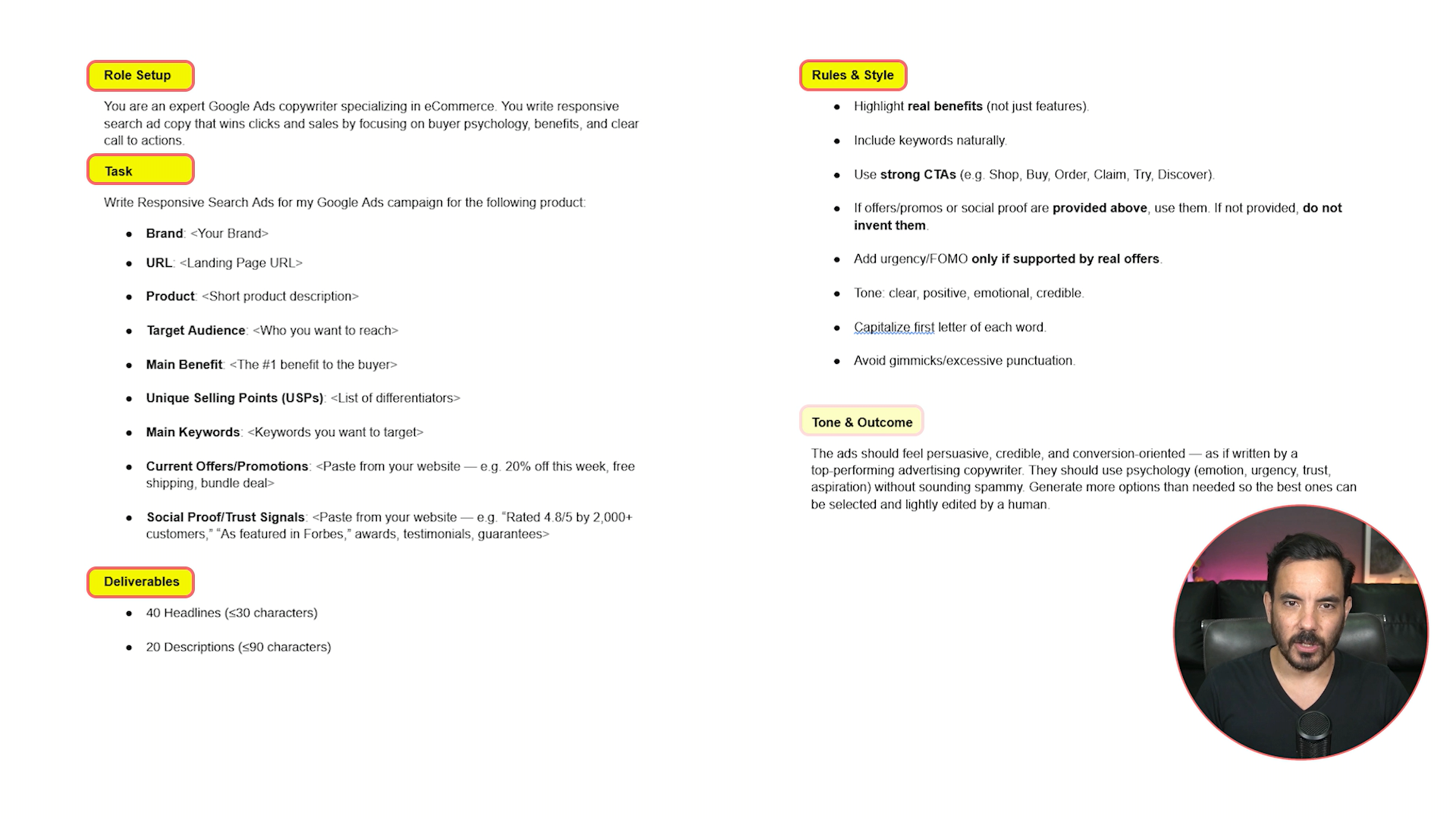
Google does not care if you use AI. It cares about quality and relevance. AI will not replace your market understanding, but it is a brilliant assistant when you give it a clear brief.
Here is a compact framework for ChatGPT that reflects what I use on real accounts.
Run the prompt, then act like an editor. Select the best lines, polish for accuracy, and mix the eight elements above across your final set. You will end up with a high-variance pool of headlines and descriptions that the system can rotate for maximum performance.
Realistic Example Layout
To show how the pieces fit:
Headline 1: “AeroStep Running Shoes”
Headline 2: “Run All Day”
Headline 3: “No More Tired Feet”
Description: “Feel stronger and faster every run. Shop Now and Save.”
Path fields: “running” and “mens”
That pairing mirrors intent, leads with a benefit, adds a CTA, includes brand, and keeps everything tight and readable.
My Quick Workflow For Writing Better Ads Faster
Draft 30 to 50 headlines using the framework above, ensuring at least one of each element type.
Draft 12 to 20 descriptions focused on one benefit each, with a clear CTA.
Remove duplicates and low-energy lines. If two headlines mean the same thing, keep the stronger one.
Ensure at least two keyword mirrors, three benefit headlines, one brand headline, one social proof, one offer, and one credibility marker.
Avoid pinning. Launch with rotation, watch combinations in the asset report, and iterate weekly.
A Short Note On How We Work At Big Flare
If you want this level of thinking applied inside your account, we do exactly this every week for clients. Everyone on my team has more than 10 years of hands-on experience. We do not put juniors on your revenue. If that sounds like what you want, you know where to find us.
Conclusion
Great Google Ads copy is a system, not a guess. Focus your energy on headlines because they carry the performance. Avoid pinning and Dynamic Keyword Insertion so the system can discover winning combinations while you keep control of tone and message. Build ads from eight elements: intent-mirroring keywords, strong CTAs, benefit-led lines, brand usage, time and FOMO, social proof, genuine offers and credibility markers. Use ChatGPT as a structured assistant by supplying clear inputs and strict rules, then edit down to the strongest lines. Keep it simple, keep it emotional, and present one clear benefit per line. Do that, and you will see more clicks from the right people and more sales at better rates.