

A little while ago I had a consulting call with an Ecommerce store owner who sells personalised gifts: think custom blankets, engraved glassware, home decor, that sort of thing. They run a large catalogue, manufacture some products in-house, bring in others from suppliers, and do well during Q4 with ROAS peaks of around 600%.
On paper, the business is healthy. But the CEO was spending 15-20 hours per week during Q4 managing Google Ads. They had tried outsourcing to agencies twice and both times it failed. So they were stuck doing it themselves, burning through time that should have been spent on higher-leverage activities like partnership deals and strategic planning.
Here is everything I told them, and honestly, most of this applies to any Ecommerce store owner running their own campaigns.
Stop Using Standard Shopping for New Product Tests
This client was using Standard Shopping campaigns to test new products, and it was holding them back. The issue is simple: Standard Shopping forces you into Maximise Clicks as your primary bid strategy, which means Google is optimising for traffic, not revenue.
My recommendation was to switch to Performance Max (feed only) for all new product testing. Why? Because PMax lets you use Maximise Conversion Value from day one. That means the algorithm is learning which clicks lead to actual purchases, not just which clicks are cheapest. For a store with a large catalogue and the ability to create new products quickly, the speed advantage of PMax feed only is significant.
Use Maximise Conversion Value, Not Maximise Clicks
This is one of the most common mistakes I see. This client had campaigns running on Maximise Clicks with a $1.50 max CPC bid cap, while the account average CPC sat between $1.58 and $2.33. They were essentially telling Google to find cheap clicks while simultaneously capping themselves below the going rate. That combination does not work.
The fix: switch to Maximise Conversion Value and do NOT apply a Target ROAS until you have accumulated 30-50 conversions. This is critical. The algorithm needs data to learn. Applying a Target ROAS too early is like asking someone to hit a bullseye while blindfolded.
The $500 Rule for New Product Testing
One of the biggest frustrations this client had was that new campaigns were not converting. They had a campaign running for 10 days with only 26 clicks. That is nowhere near enough data to draw any conclusions.
Here is the budget framework I gave them:
Daily budget: $50/day for new product test campaigns
Total spend before judging: approximately $500
First conversions expected: around $180-200 in spend (roughly 3x the product price)
At $10/day, which is what they were spending, you will barely collect enough clicks to fill a spreadsheet, let alone train an algorithm. You need to invest upfront to give the campaign room to learn. Think of that initial $500 as the cost of market research; it buys you real data about whether a product has legs in paid advertising.
Impression Share: The Metric Nobody Watches
This client was not monitoring impression share at all, and I would wager that most Ecommerce advertisers are in the same position. It is one of the most useful signals in your account and it tells you whether you are overpaying for traffic or leaving money on the table.
Here are the benchmarks I shared:
30-40% impression share: This is the sweet spot for non-branded Shopping and PMax campaigns. It means you are competitive without overspending.
50-60% impression share: Only acceptable for standout products with strong brand recognition.
80-90% impression share: You are almost certainly overpaying. You are winning nearly every auction, which means your bids are higher than they need to be.
Below 20% impression share: Your budget or bids need increasing. You are barely showing up.
If you walk away today with just one new metric to track, make it impression share.
How to Control ROAS Without a Target ROAS
This was a lightbulb moment on the call. During the learning phase, before you have 30-50 conversions, your daily budget becomes the primary lever for controlling ROAS.
It works like this:
Higher daily budget = the algorithm bids more aggressively = lower ROAS but more volume
Lower daily budget = the algorithm bids more conservatively = higher ROAS but less volume
So if your Maximise Conversion Value campaign is spending too aggressively and ROAS is tanking, reduce the daily budget slightly. If ROAS is strong but you want more volume, nudge the budget up. It is a simple lever, but most people do not realise it exists until they have already applied a Target ROAS too early and strangled their campaign.
The "Core 4" Metrics
I told this client to stop drowning in data and focus on four numbers:
Spend: total ad expenditure
Revenue: total conversion value
ROAS: return on ad spend
Gross profit after ad spend: contribution margin
The crucial bit: you must never look at any of these in isolation. A 600% ROAS means nothing if you only spent $10. A huge revenue number means nothing if your gross profit after ad spend is negative. All four together tell the full story.
Stop Obsessing Over Negative Keywords
This might be the most controversial point, but I stand by it. This client was spending hours reviewing search term reports and adding negative keywords. That time is largely wasted.
Google's AI has improved dramatically in recent years. It is genuinely effective at finding the right audience within broad search terms. Counter-intuitive searches often convert better than you would expect. For example, someone searching "throw blanket" rather than "personalised throw blanket" might still purchase a personalised product once they see the ad.
The algorithm learns which searches convert and which do not. You do not need to micro-manage that process, especially when you are a CEO with a hundred other things demanding your attention.
Isolate Products When Testing
When you want to test a single product, exclude it from your other PMax and Shopping campaigns. This prevents your campaigns from competing against each other in the same auction, which wastes budget and dilutes your conversion data.
Clean data for the test campaign means faster learning and more reliable results. If the product lives in three campaigns simultaneously, you have no idea which campaign is actually driving the conversions.
Audience Signals: 30 Minutes, Maximum
I told this client to spend no more than 30 minutes on audience signals and demographics when setting up a PMax campaign. They offer a small benefit, but they are not critical. If you are a CEO running your own campaigns, there are far better uses of your time. Set them up, move on, and focus on the fundamentals that actually move the needle.
The Real Tradeoff
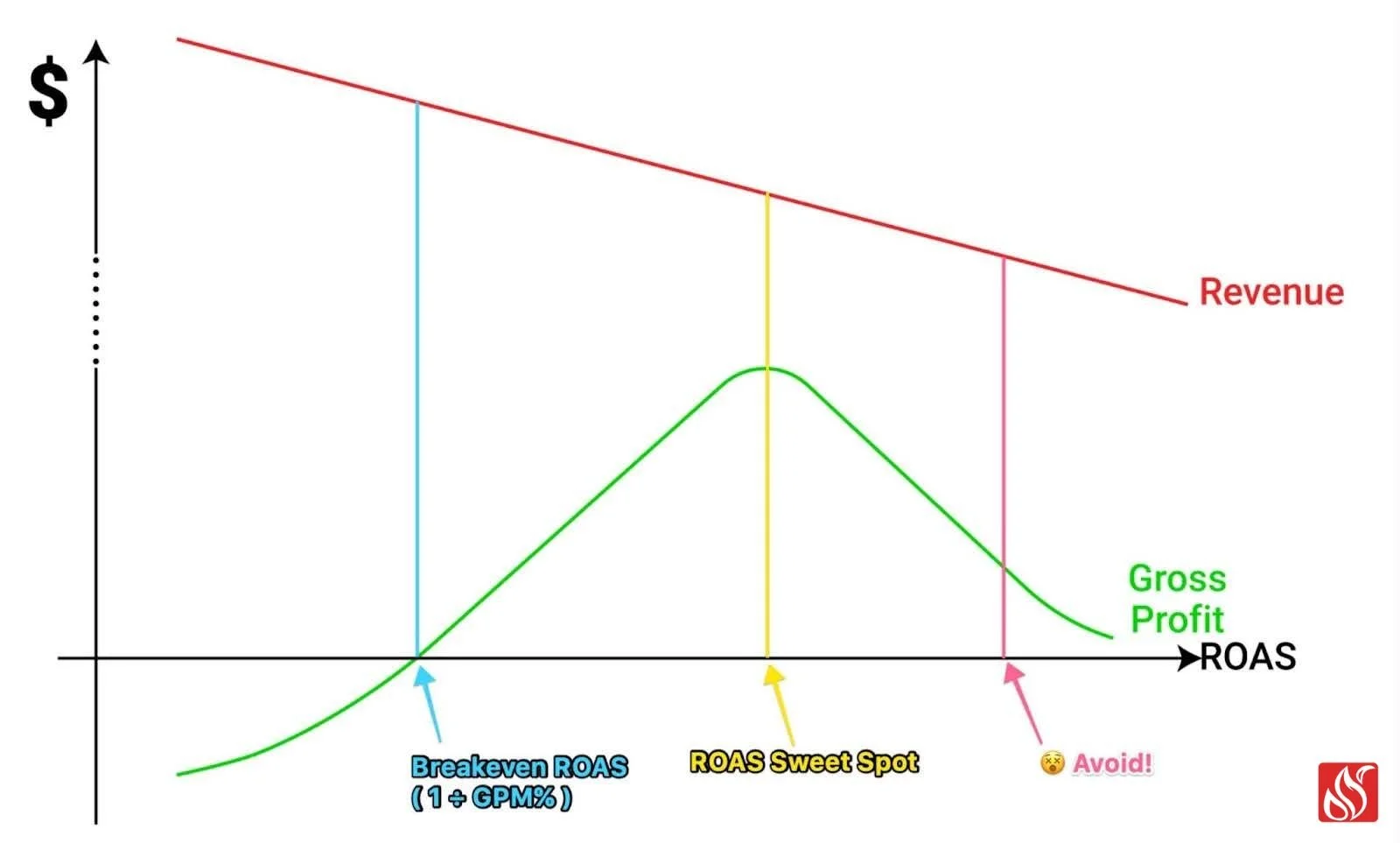
Here is the thing nobody tells you about ROAS: you can achieve any ROAS you want. Literally any number. The question is what tradeoff you are willing to make with volume.
Higher ROAS = lower volume. Lower ROAS = higher volume. That is not a failure of your campaigns; it is how the system works. The decision should be driven by your business goals, your margins, and your capacity to fulfil orders, not by some arbitrary ROAS target you saw in a YouTube comment.
This client was achieving 450-500% ROAS on average, with peaks of 600% during holidays. Those are strong numbers. But if they wanted to scale further, they would need to accept a lower ROAS and focus on whether the gross profit after ad spend still made the business case work.
Conclusion
If you are an Ecommerce store owner managing your own Google Ads, here are the key points:
Use Performance Max (feed only) instead of Standard Shopping for testing new products, so you can use Maximise Conversion Value from the start.
Do not apply a Target ROAS until you have 30-50 conversions. Use daily budget as your lever to control performance during the learning phase.
Budget $50/day and plan for approximately $500 in total spend before judging a new product campaign.
Monitor impression share. Target 30-40% for non-branded campaigns.
Focus on the Core 4 metrics: spend, revenue, ROAS, and gross profit after ad spend. Never look at them in isolation.
Stop spending hours on negative keywords. Trust the algorithm.
Isolate products when testing by excluding them from other campaigns.
Remember the tradeoff: higher ROAS means lower volume. Choose based on your business goals, not arbitrary targets.
Your time as a business owner is valuable. Spend it on strategy, not search term reports.