
At the end of August, Google pushed an update to the Merchant Center API, and for some stores using Shopify's Google & YouTube app, it reset their custom labels and their feed rules.
Not paused them. Not flagged them. Just quietly reset them. The DTC newsletter picked it up shortly afterwards. Here’s what happened next, along with the rest of this month’s ecommerce news.
Google Silently Wiped Custom Labels On Shopify Feeds
Your campaigns do not stop when this happens. They carry on spending, against product groups that no longer contain the products you think they do.
Custom labels are the tags you attach to products in your feed, so you can split best sellers, high margin lines and clearance stock into separate Standard Shopping and Performance Max product groups.
So imagine those labels vanishing. Your high margin campaign is suddenly bidding on everything you sell. Your clearance campaign, capped at a low ROAS target, is now discounting your hero products. There is no alert and no red banner, so performance just becomes a bit worse and you blame seasonality.
The Two Minute Check
First, open Merchant Center, go to your products list and look at your custom label columns. If you have labels set up they should be populated. Empty, or reverted to a default, is your answer.
Second, open the Google & YouTube app in your Shopify admin and check your feed rules are still in place.
Third, and this is the one people skip, look at your product groups. A big pile of spend in your "everything else" group is a strong signal your labels have gone walkabout.
Those steps assume the Shopify app, but feed integrity matters whatever platform you sell on, and nobody checks it until it costs them money. Put a monthly reminder in your calendar.
One other Merchant Center change. YouTube affiliate traffic has moved outside the organic bucket, with numbers restated back to the first of July. So if your organic traffic looks like it fell off a cliff, that is why. The goalposts moved.
Your Meta ROAS Dropped And It Was Not Your Fault
If you run Meta Ads alongside your Google Ads, August was rough.
Pilothouse, who run a lot of ecommerce Meta ads, published a breakdown from the stores they work on. Conversion rates were down around forty percent relative to where CPCs went. Clicks became cheaper, but far fewer turned into a sale. Average order values lifted ten to twenty percent, nowhere near enough to cover the gap. Mondays, and Thursday into Friday, were the weakest ROAS windows.
The finger points squarely at Andromeda, Meta's recommendation system, and its shift towards creative-led targeting. Your audience settings used to decide who saw your ad. Now the ad does that job. Meta reads your creative and delivers it to whoever it thinks it suits.
Your creative is now your targeting.
That is why so many stores watched their numbers sag without changing a setting. A change to one conversion metric's definition muddies month on month comparisons further.
My honest take is that the reaction matters more than the news. The instinct is to cut budgets and rebuild from scratch, which is almost always wrong, because you reset your learning on an already unstable platform. What held up for Pilothouse was consolidation, cost caps and CBO, Advantage Plus Shopping, and proper incrementality testing.
And if your creative is doing your targeting, your creative testing budget is your targeting budget. You cannot fix a creative-led system with settings. Put the energy into more angles, hooks and formats.
ChatGPT Ads Turned On Customer Data Sharing By Default
This is the one to act on today if it applies to you.
Search Engine Land reported that ChatGPT Ads has rolled out oCPC bidding, product carousels, and Automatic Advanced Matching. That last one sends hashed customer data to OpenAI, and it was switched on by default from the seventeenth of August unless you opted out.
Hashed means scrambled before sending, and Meta and Google both do a version of this, so the mechanism is nothing new. The default being on is what matters. If you sell into the UK or Europe, your privacy policy has to match what your website does, and "my ad platform turned it on for me" is not a defence anybody wants to test.
So open your ChatGPT Ads settings today and check. If you are happy with it, leave it on. Just make it an active decision.
The pace here is remarkable. OpenAI removed the manual bid requirement, added a Maximise Results strategy, published its first list of eligible placements, and started expanding into Europe. Reported scale sits around eight hundred million monthly active users and something like seventeen percent of global digital queries, though treat those as reported rather than gospel, because OpenAI does not publish them.
My take: I would not move serious budget out of Google right now, because the measurement is young and you do not want Q4 spend somewhere you cannot attribute. But I would open an account and test small. Manual bidding to automated bidding to product carousels in a few months is the trajectory Google Shopping was on fifteen years ago.
TikTok Shop Just Out-Earned Target Online
This number properly surprised me. In July, TikTok Shop captured roughly two percent of all US ecommerce spend, up from one point two percent a year earlier. That makes it bigger in online spending than Target, Costco and Home Depot, three of the biggest retailers in America, passed by a shopping feature bolted onto a video app.
TikTok Shop feels like it is for cheap impulse products and viral gadgets, and for plenty of stores that is a fair read. The second part of this story is more interesting.
Modern Retail reported that brands are seeing TikTok Shop content drive purchases completed somewhere else entirely. A WorkMagic case study found sixty-two and a half percent of TikTok-driven sales were completed on Amazon or another retailer, and only thirty-seven and a half percent inside TikTok Shop itself.
So nearly two thirds of the value was invisible if you only looked at the TikTok Shop dashboard. That is exactly why store owners test TikTok, see the in-app ROAS and switch it off. They are grading it on a third of its output. TikTok has since launched an off-site performance tool, though it excludes Amazon, Walmart and offline sales.
So if you have written TikTok off on its own reporting, that judgement is probably wrong. Watch your total revenue and branded search volume during a TikTok push instead. If both climb while spend is on, it is working, whatever the dashboard says.
AI Shoppers Convert 60% Better, And Most Stores Are Invisible To Them
Last one, and this is the Q4 project I would pick.
Adobe published data in August on AI referral traffic, covered by Digital Commerce 360. That is people arriving from ChatGPT, Gemini, Perplexity and the like. It is up sixty-two percent year on year, and roughly twelve hundred percent since October 2024.
Volume is still small compared with Google. But it converts sixty percent better than your other traffic and adds to cart twenty-eight percent more often. Somebody who has just asked an AI to compare three products has done their research already, so they arrive far further down the funnel.
Now the problem. The same research found only sixty-one percent of retail homepages are readable by AI shopping agents. So when an AI goes looking for a product like yours, there is a real chance it cannot see you.
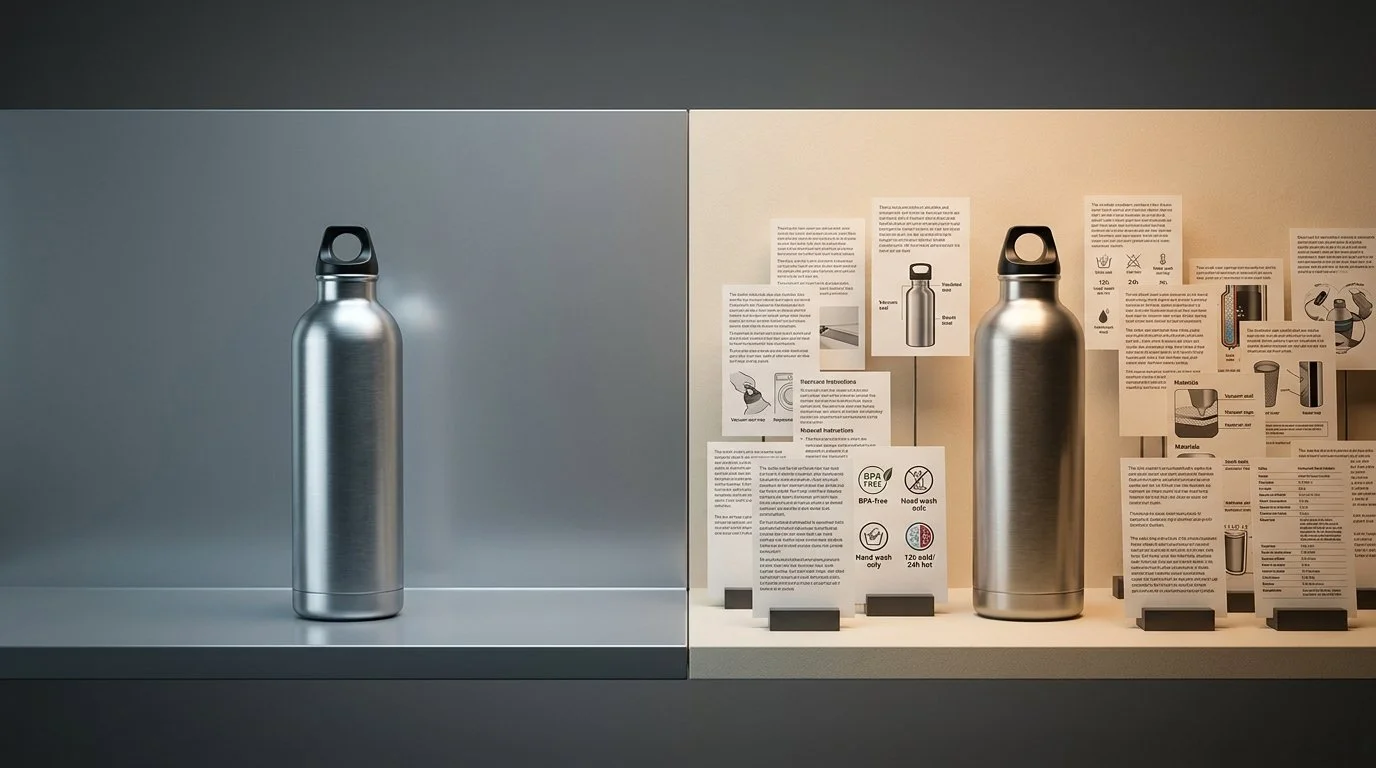
Stanley, the drinkware brand, found their product pages were so image-heavy that AI tools had almost no text to work with. So they added FAQs, care instructions, structured data, and natural-language guides around use cases like gifting, travel, fitness and hosting.
Dull work, and it is what decides whether an AI can describe your product to a buyer ready to spend. It reads your titles, descriptions, attributes and structured data, the same information that drives your Shopping and Performance Max performance. Every hour on product data pays you twice.
So look at your best-selling product page. If you stripped out every image, would there be enough text for a stranger to understand what this product is, who it is for, and why it beats the alternative? If not, that is your Q4 project. And check your robots file is not blocking the AI crawlers.
Conclusion
August produced five updates that all point the same way: the things quietly changing underneath your account matter more than the settings you spend your time adjusting.
Google pushed a Merchant Center API update that reset custom labels and feed rules on some Shopify stores using the Google & YouTube app, with no alert of any kind. Check your custom label columns in Merchant Center, check your feed rules in the Shopify app, and check whether spend has piled into your "everything else" product group. Whatever platform you sell on, put a monthly feed integrity check in your calendar. Separately, Merchant Center moved YouTube affiliate traffic out of the organic bucket and restated history back to the first of July, so a sudden organic drop there is a reporting change rather than a real one.
Meta conversion rates fell around forty percent relative to CPCs in August, with average order values up ten to twenty percent, nowhere near enough to cover the gap. Andromeda has shifted Meta towards creative-led targeting, so your creative is now your targeting. Consolidation, cost caps and CBO, Advantage Plus Shopping and incrementality testing all held up. Panic-rebuilding did not.
ChatGPT Ads switched Automatic Advanced Matching on by default from the seventeenth of August, sending hashed customer data to OpenAI. Check the setting and make it an active decision, particularly if you sell into the UK or Europe. OpenAI also added Maximise Results bidding, published its eligible placements and began expanding into Europe. Reported scale sits around eight hundred million monthly users and roughly seventeen percent of global digital queries, though those figures are third-party reported rather than published by OpenAI. Test it small, and keep your Q4 budget where you can measure it.
TikTok Shop reached roughly two percent of US ecommerce spend in July, up from one point two percent a year earlier, putting it ahead of Target, Costco and Home Depot online. A WorkMagic case study found sixty-two and a half percent of TikTok-driven sales completed on Amazon or another retailer, so in-app ROAS grades the channel on about a third of its output. Judge it on blended revenue and branded search instead.
AI referral traffic is up sixty-two percent year on year and converts sixty percent better while adding to cart twenty-eight percent more often, yet only sixty-one percent of retail homepages are readable by AI shopping agents. Stanley fixed this with FAQs, care instructions, structured data and use-case guides. The same product data powers Standard Shopping, Performance Max and AI shopping agents, which makes it the highest-leverage Q4 project on this list.